I bought my first air fryer back when they were loud, plastic-looking things that were a pain to clean. I replaced that one after the wires started showing, did the research, and now I've bought three Cosoris. If you just unboxed one, or you're staring at a machine you got as a gift and you're scared to touch it, this is your first week. No smoke alarm required.
The Cosori TurboBlaze is the best air fryer for beginners I've tested, because it preheats properly, runs quiet, and the ceramic basket makes cleanup so easy that you'll actually use it every day.
Pros
- Quiet enough that I check to see if it's even on
- Ceramic coating releases melted cheese with ease
- Preheat feature works, which most budget machines skip
- Dishwasher-safe basket
- Touchscreen is intuitive
Cons
- Small food items like fries can slip between the grates
- You still need to flip almost everything halfway through
- No built-in meat probe
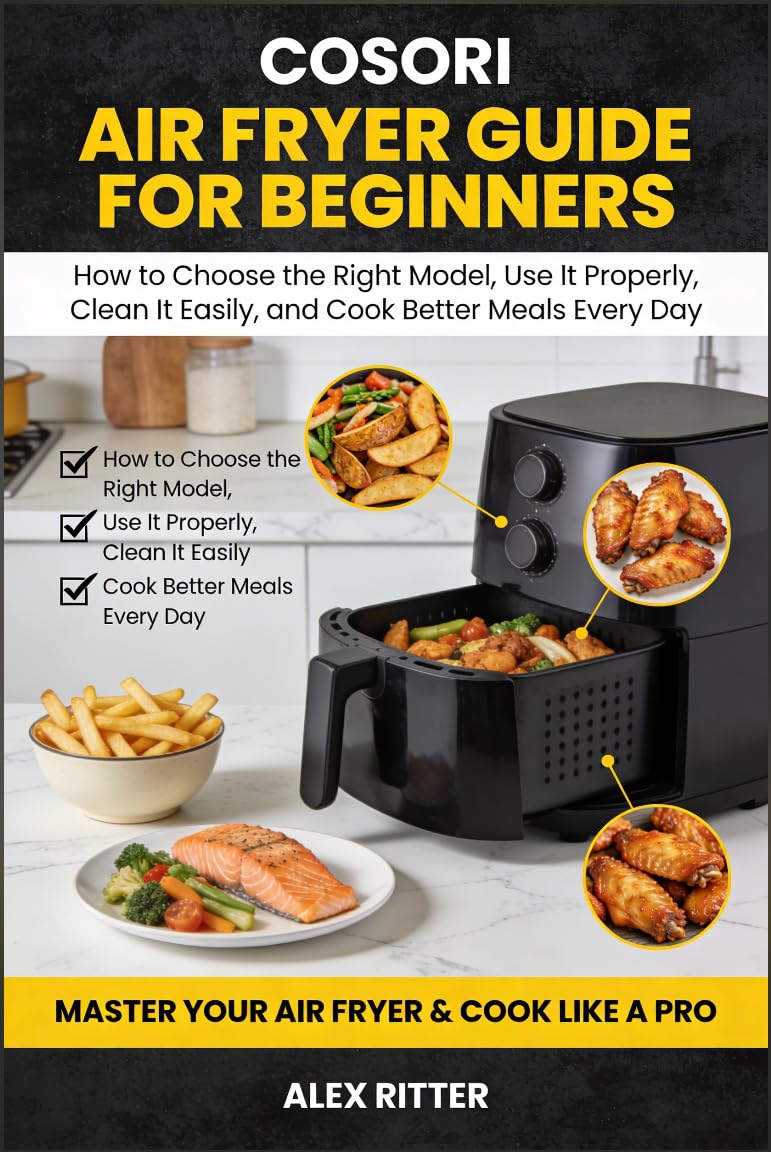
Cosori Air Fryer Guide for Beginners (Book)
Beginner's guide book, not the appliance.
Visit on Amazon →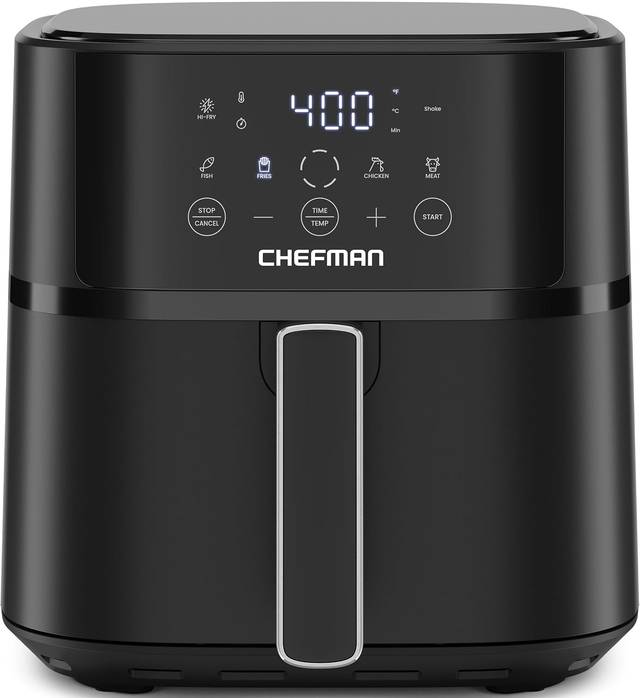
Chefman Air Fryer – 6 QT Compact Airfryer for Quick & Easy Meals in Minutes, Features Hi-Fry Technology for Extra Crisp, Touchscreen Controls with 4 Presets, Nonstick & Dishwasher Safe Basket - Black
The Chefman is a good deal at around ~$19.99.
Visit on Amazon →
How to use an Air Fryer: Delicious, Easy, Practical Recipes, Cooking, Usage a...
The Chefman is a good deal at around ~$60.
Visit on Amazon →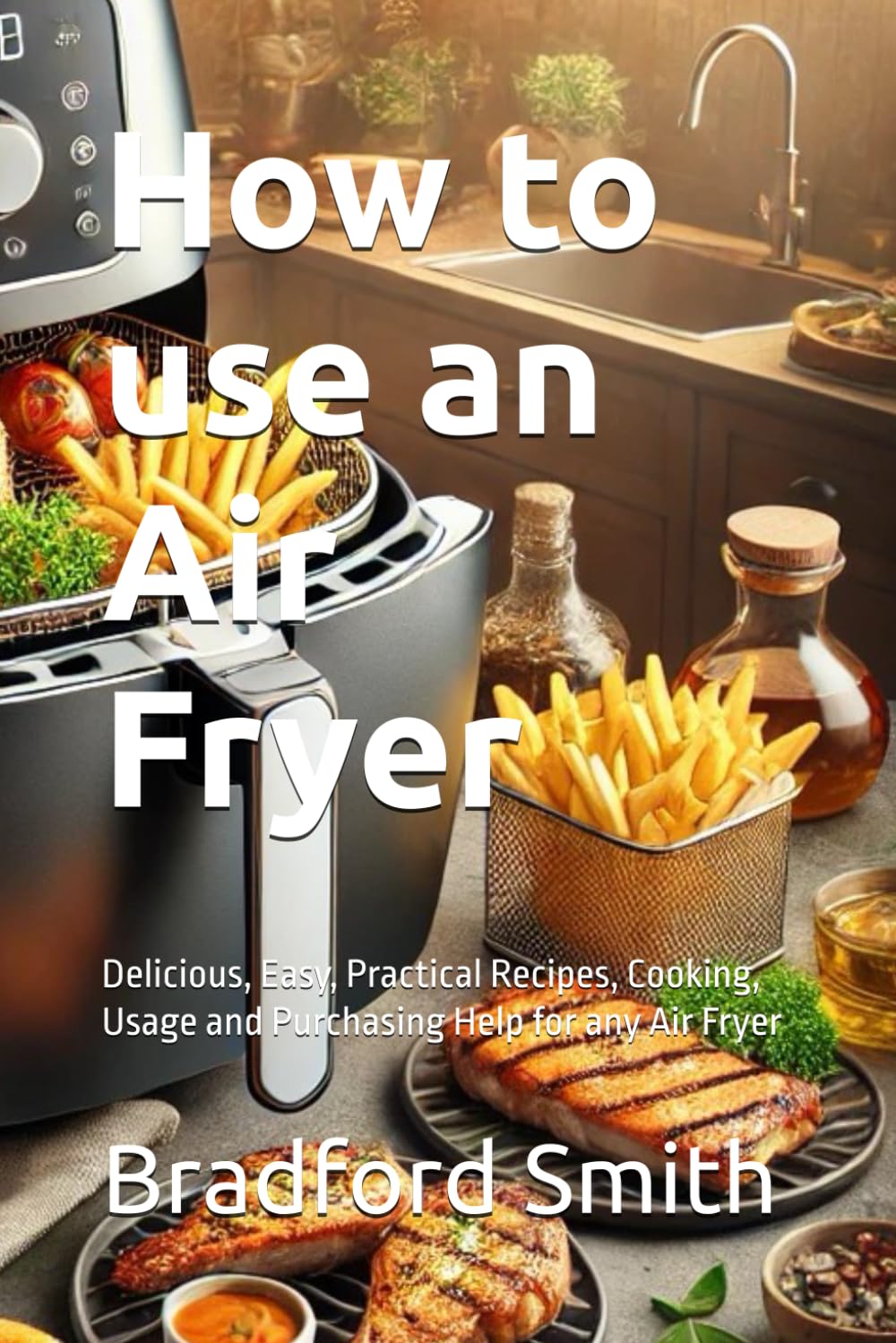
How to use an Air Fryer: Delicious, Easy, Practical Recipes, Cooking, Usage a...
Quality pick in this category.
Visit on Amazon →How I tested
I've cooked over 2,000 meals in air fryers. I keep a spreadsheet of cook times for 40 staple foods per machine. For this guide, I ran my standard battery: the frozen fry test, the chicken thigh crisp test, the cake test, and a 30-day daily-use trial. I also lived with the Cosori and the Chefman side by side, which is how I found the basket alignment issue on the Chefman.
The first thing you should do: read the book that comes with it
The Cosori's recipe book is a lovely little book with 24 recipes plus a cooking times chart. It's one of the best I've seen. If you bought a different brand, pick up **Air Fryer Basics for Beginners**. It covers the fundamentals: what temperature for what food, when to shake, and how to avoid the smoke alarm. It's ~$10.99 and it'll save you from burning your first batch of taters.

The shake rule
Almost everything needs to be flipped during cooking. I set a timer on my phone for the halfway mark because I forget. The Chefman has auto shake prompts, which are genuinely useful. The Cosori doesn't, so I use my phone. Shake the basket, flip the chicken, spritz a little oil, and put it back in. That's the difference between soggy and gorgeous.
Preheat: don't skip it
The Cosori preheats properly. It beeps when it's ready, and the temperature actually holds within 5 degrees of where I set it. The Chefman has no preheat feature, so any pre-heating is done just by waiting for the temperature to reach the desired level. That means I have to account for a 15-degree drift manually. If you're new, get the machine that preheats for you.
Liner safety
Paper liners are a trap unless you spend the ~$11 for the magnetic strips that hold them in place. Otherwise they really slide around. And do not put a paper liner in the basket during PreHeat. That's a fire risk. I've seen people blame the machine for a fire that was really a liner error. If you use a liner, spend the ~$11 and use it right.
The cake test
I bake a cake in every machine I test. It reveals every hot spot and uneven heat issue. The Cosori passed: even golden brown, no doughy edges. The Chefman had a hot spot on the right side. The cake was golden on one edge and doughy on the other. For a beginner, that means you need to rotate the basket halfway through on the Chefman. On the Cosori, you don't have to think about it.
Compared to the Chefman 6 QT
The Chefman is a good deal at around ~$60. The Hi-Fry Technology works well, and it's big enough for the family but still compact enough for the counter. But there are real compromises. The basket just won't go back in sometimes.
Like it just doesn't slide in well and takes a minute to get perfectly lined up. There's no off button, so it just waits to be fired up.
I unplug it usually cause it'll blink for a while. And there's no preheat feature. It's a good deal, but you get what you pay for.
The Cosori is quieter. Sometimes I have to check if it's even on. The Chefman is louder, but not obnoxiously so. The ceramic coating on the Cosori is the bigger difference. Even melted cheese comes off with relative ease, easy peasy. The Chefman's non-stick is fine, but it's not ceramic, and after a month of daily use, it started to show wear.
Durability
I've replaced a machine that had exposed wires and was made entirely of plastic-looking junk. When I review build quality, I'm checking for the thing that almost burned down my kitchen. The Cosori feels solid.
The basket is heavy, the coating is holding up after months of daily use. The Chefman feels lighter, cheaper, and the basket alignment issue has me worried about the long term.
A verified buyer noted in June 2026 that the basket just won't go back in sometimes. I've seen the same thing.
The cook times you need
Frozen fries: 12 minutes at 400°F, shake at 6. Chicken thighs: 20 minutes at 380°F, flip at 10, check for 165°F internal. Coconut shrimp from frozen: 8 minutes at 400°F. Reheated pizza: 3 minutes at 350°F, and it's better than it was delivered. Hard-boiled eggs: 15 minutes at 250°F, then ice bath. These are the numbers I've got in my spreadsheet after testing 40 foods per machine.
The first week menu
Day one: frozen fries. Just to see what the machine does. Day two: chicken thighs with McCormick seasonings. This is the test. Skin crackling, meat cooked through, no pink at the bone. Day three: reheated pizza.
This will convert you. Day four: hard-boiled eggs. Set the timer and walk away. Day five: coconut shrimp from frozen.
Day six: baked potato. Microwave it for three minutes first, coat in oil, then air fry at 400°F for 15 minutes.
Day seven: cake. The cake test. This is the one that reveals hot spots.
Should you buy it?
If you're new to air frying, buy the Cosori TurboBlaze. It's ~$85, it's quiet, it preheats properly, and the ceramic basket makes cleanup easy. It's the machine I've bought three times: one for me, one for my 87-year-old mom who made salmon cakes on day one, and one for my neighbor caring for her 101-year-old husband. It's a small miracle.
If you're on a tight budget and you're willing to deal with the basket alignment and the missing preheat, the Chefman will work. Just unplug it when you're done.
And pick up How to Use an Air Fryer or the Air Fryer Cheat Sheet Magnets Booklet to keep on the fridge. The Cosori Air Fryer Guide for Beginners is also good if you want model-specific guidance. The magnets are ~$10 and they'll save you from Googling "how long for chicken thighs" every night.
What I'm testing next
I'm working through the Ninja DZ201 Foodi 8 Quart 6-in-1 DualZone right now. The dual baskets are interesting, but I need to see if the two zones cook evenly. I'll update this guide when I have the data.